
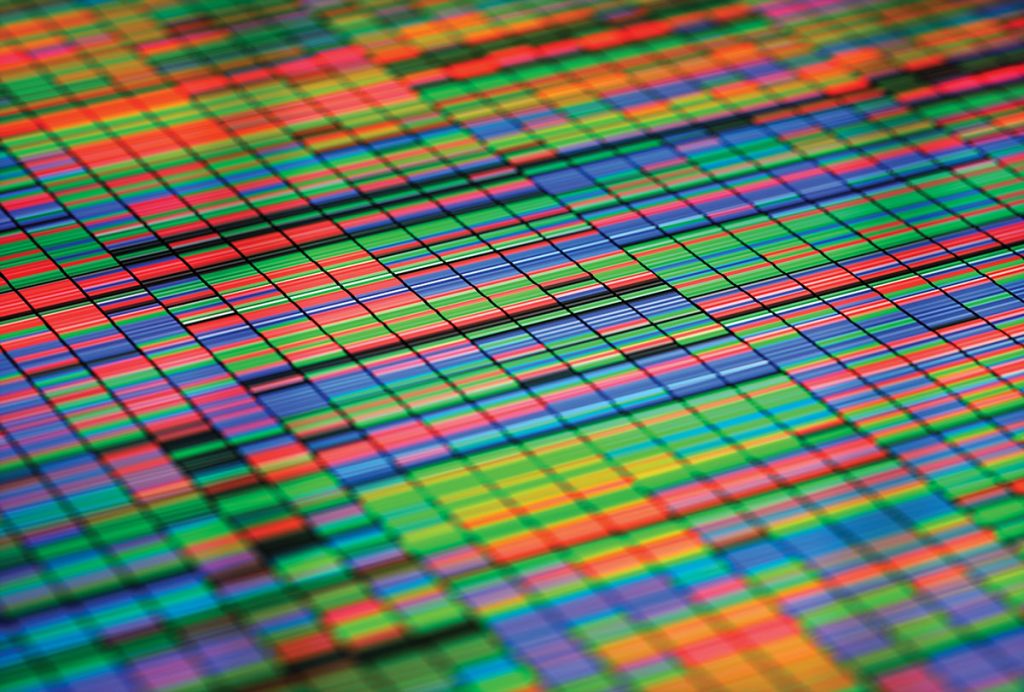
 Imagine a future where your health care is tailored to you. Where medical treatment is prescribed based on your unique genetic makeup. Where disease can be prevented even before it strikes. That future may not be so distant.
In 2016, the Precision Medicine Initiative allocated $130 million to the National Institutes of Health (NIH) to usher in an era focused on prevention and treatment through individualized care. The initiative’s biggest goal, which it calls “All of Us,” involves collecting DNA from 1 million or more U.S. volunteers – so researchers can analyze the data they need to learn how to customize care.
“The All of Us research is a radical shift on how we’re going to treat Americans and America in health care,” says Colleen Leners, director of policy for the American Association of Colleges of Nursing. “It should not be one size fits all. People are unique and different… It’s a way to take underrepresented people from the community and get them involved in the research, to really make a personalized medicine for individuals.
Our goal is… to have the largest data set ever.
“The right medicine at the right time for the right patient.”
Linfield students and faculty are taking part in the historic effort. The School of Nursing hosted an “All of Us” introduction in late July, providing an overview of the initiative and bringing Portland-area community leaders together to establish ways to recruit participants.
Precision medicine is the future, says Jacqueline Webb, associate professor of nursing at Linfield. Students are learning about the advances so they can educate their patients and families, and become leaders in communities where many have yet to understand the impending shift.
“Our nurses are educated to learn what that means, what role they will be playing with their patients,” she says. “If you and I have lung cancer, for example, we might not be able to have the same kind of management and treatment. We don’t all respond the same way to chronic illnesses and we’re not all going to respond the same way to the management.”
And because we’re all different, the data should reflect the nation’s diversity, which is one of NIH’s intentions –including communities historically underrepresented in biomedical research.
Data is the primary goal of the initiative, but the information won’t be controlled by any one entity. It will be shared by voluntary participants and researchers alike – NIH only began recruiting in 2018, so it estimates it will take another five or six years to reach the 1 million mark.
“Knowing about our patients and where they come from, in their day-to-day life, and taking what may seem like small information and applying it to the management of their health is important,” said Mary Erwin ’19. “It’s knowing holistically about individuals and patient-centered care.”
Learn more at allofus.nih.gov.
– Jeffrey Martin


