
Professor Yanna Weisberg unlocks the mysteries of personality
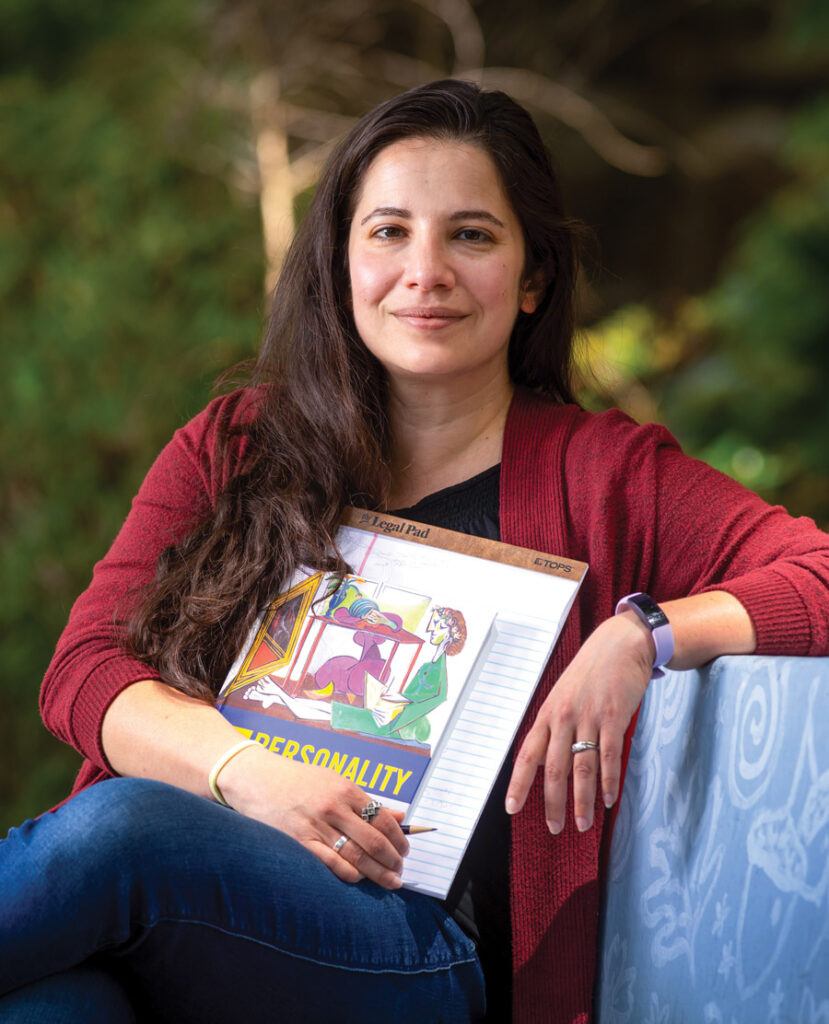
Go to any gathering and you will see a variety of personalities on display: the wallflower standing off to the side; the rowdy ringleader in the center of onlookers; the small group of people having a meaningful conversation; and the networker, flitting from conversation to conversation.
But why do some people crave social interactions while others dream of a “Walden”-inspired solitary life? What makes an individual like to connect with others?
Yanna Weisberg, Linfield professor of psychology, is exploring this concept – referred to as trait affiliation. (A person’s natural desire, in other words, to bond and connect with other people.)
“Trait affiliation plays a significant role in understanding interpersonal behavior and human connections. It goes beyond just positive emotionality and compassion; it’s like a unique blend that drives us to seek and maintain meaningful relationships,” she said. “Understanding the correlation between affiliation and other traits helps unravel the complexity of human social connections and what drives our desire for closeness.”
To explore this concept, Weisberg first had to better define affiliation and where it fit into the accepted research on personality psychology.
“I’m fascinated by understanding people, examining what they do, why they do it and how they became that way,” she said. “The goal of personality psychology is to help us do this by seeking to understand and explain individuals as a whole, including exploring their motivations and development.”
Weisberg used a model known as the interpersonal circumplex, which describes different styles of social behavior, to study where affiliation falls in relation to other traits. Her research team confirmed that affiliation, which is generally described using terms like warmth or positive emotions, fell between the aspects of extraversion and agreeableness.
“This blend of traits comprises the warmth of extroversion’s enthusiasm and the nurturing compassion of agreeableness,” she said.
Recently, Weisberg started delving into the biological basis of trait affiliation and what role neurochemistry – the chemicals and neurotransmitters in the brain – plays in an individual’s level of trait affiliation.
“Exploring the biological precursors of trait affiliation sheds light on the profound impact it has on how we perceive others and experience closeness,” she said. “Unraveling this driver of social behavior is essential for a deeper understanding of human nature and the science of relationships.”
One specific area of focus is the role of endogenous opioids – molecules in the nervous system that regulate pain, stress, motivation and other emotions – on social bonding.
Weisberg and her team are examining how manipulating levels of endogenous opioids, such as endorphins, in participants’ bodies affect individuals with varying degrees of affiliation.
“Rather than measuring the neurotransmitter levels directly, which would require invasive procedures, we manipulate levels of endogenous opiates through running a paintbrush up and down people’s forearms to see what the differences, if any, are evident in their in emotional responses,” she said.
Preliminary results suggest those with higher levels of trait affiliation respond more strongly in terms of affiliative emotions. While additional results from the opiate induction during the arm brushing activity still remain to be studied, the project is poised to provide insights into people’s tendencies toward social bonding.
“By unraveling the biological foundations of trait affiliation, we can better understand the mechanisms driving human social behavior,” Weisberg said. “This knowledge holds the potential to inform the development of targeted interventions and therapies for individuals with personality disorders, ultimately improving their quality of life.”


