
Archivist examines how one gift changed the course of an institution
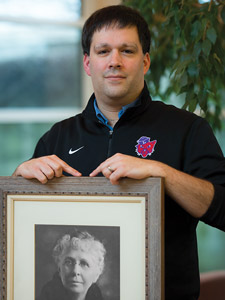
When McMinnville College changed its name to Linfield College in 1922, it was a move of necessity. The school had existed since 1858 but had never been on solid financial footing. Every incremental bit of progress had been two steps forward and one back, and McMinnville College always perched on the precipice of insolvency. The 1922 Oak Leaves yearbook, celebrating the new name, includes the following passage:
“More than once has the board of trustees in years that are past, continued in all night session trying to provide some bread where there seemed to be nothing but stones. More than once have its professors, some of whom yet remain in the ranks, had their salaries six and even twelve months in arrears, pitifully inadequate though they were.”
By the end of 1922, though, and thanks in large part to the donation of Mrs. Frances Ross Linfield, the school was debt-free. President Leonard Riley had spent more than a decade shoring up the finances, bringing the curriculum up to standard, attracting increased attendance (enrolling up to 206 college-level students) and adding buildings to the campus. Mrs. Linfield’s donation was a lifeline, and the final step toward (tenuous) financial security in the short term. It was the first time the school had the chance to really move beyond the day-to-day need to keep the lights on and start to plan for the future. Renaming the school in honor of the donation was never in doubt nor up for much debate, given the magnitude of the gift.

In fact, immediately upon receiving the donation, Riley announced the school’s goal to have a $1 million endowment by 1925. Such a goal would have been inconceivable even a few years before.
The change from McMinnville College to Linfield, then, was more than nominal. It was a change to the core of the school, a shift toward an optimistic future and a breath of fresh air after decades of struggle. The school wasn’t magically saved overnight, but in a very real sense it took one day for McMinnville College to become Linfield College.
It took another 100 years for it to become Linfield University.
Where the original change to Linfield was at the behest of a noble benefactor and largely out of necessity, the university name came from a century of growth, adaptation, strategic change and a clear – if sometimes shifting – vision of the future. Linfield College matured, survived the war years, modernized its curriculum, expanded its campus, added a nursing program, grew and diversified its student body, faculty and staff, and evolved into an institution ready to take the next step.
This time, rather than a change of necessity, the next step reflected a change of strategy. Linfield University was the next phase needed to introduce graduate programs, attract international students, expand offerings on an all-new Portland campus and grow at a time other colleges are shrinking. (And came just as Oregon community colleges were poised to begin offering “applied baccalaureate” degrees, muddying the waters further about the definition of a college.) A large group of constituents played a role in the change, from strategy to planning and implementation. It was a shift decades in the making, and the product of a desire for a different, more expansive, future.
As we look back on 100 years of “Linfield,” it seems perhaps appropriate to give the last word to the class of 1922, the first class to graduate under a Linfield banner and an institution looking brightly toward the future. The class of 2022, which graduated in May in Linfield’s first in-person commencement ceremony in three years, might have expressed something similar. From the 1922 Oak Leaves yearbook:
“Let… our beloved Alma Mater press on towards the light that even now is beckoning Linfield College into the freshness of a New Day. Let us whole-heartedly support her administration, honor her ideals and, having done this, seek to introduce her to those who desire to spend their college days in such an institution as Linfield College. Thus shall we cherish her name and extend her fame through future years.”


