We could, if we wanted,
follow the old buck
down through the madrone grove,
the high branches splitting now
their ochre skins. See how
below the boulderfall
he slows, slips without sound
through sword fern
& thimbleberry, waits
in deep creek-shadow? He knows
this is where they might meet,
he & whoever will one day
taste him. We could,
if we wanted, follow farther —
follow down the mountain
rock-clack & leaf-shatter,
his trail of dripwater & piss
all the way to the river,
where at his shadow
salmon flash & scatter,
& eagles dream him
drowned & on a gravel bar
wracked, which is how eagles
dream all of us. Child,
there is no place
we couldn’t find him. Even
if he were the last,
we could one hour or day or year —
it’s all the same —
take him in our arms,
the almost unbearable softness
of the ear.
– Joe Wilkins
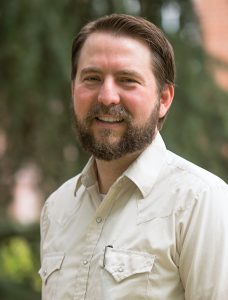 Joe Wilkins, director of creative writing and associate professor of English and environmental studies at Linfield, won the Stafford/Hall Prize for Poetry from the 2017 Oregon Book Awards for When We Were Birds. The collection was published as part of the Miller Williams Poetry Prize Series, edited by former U. S. Poet Laureate Billy Collins. Wilkins is also author of a memoir, The Mountain and the Fathers, which won a GLCA New Writers Award in 2014, as well as two previous books of poetry, Notes from the Journey Westward and Killing the Murnion Dogs.
Of this poem Wilkins writes:
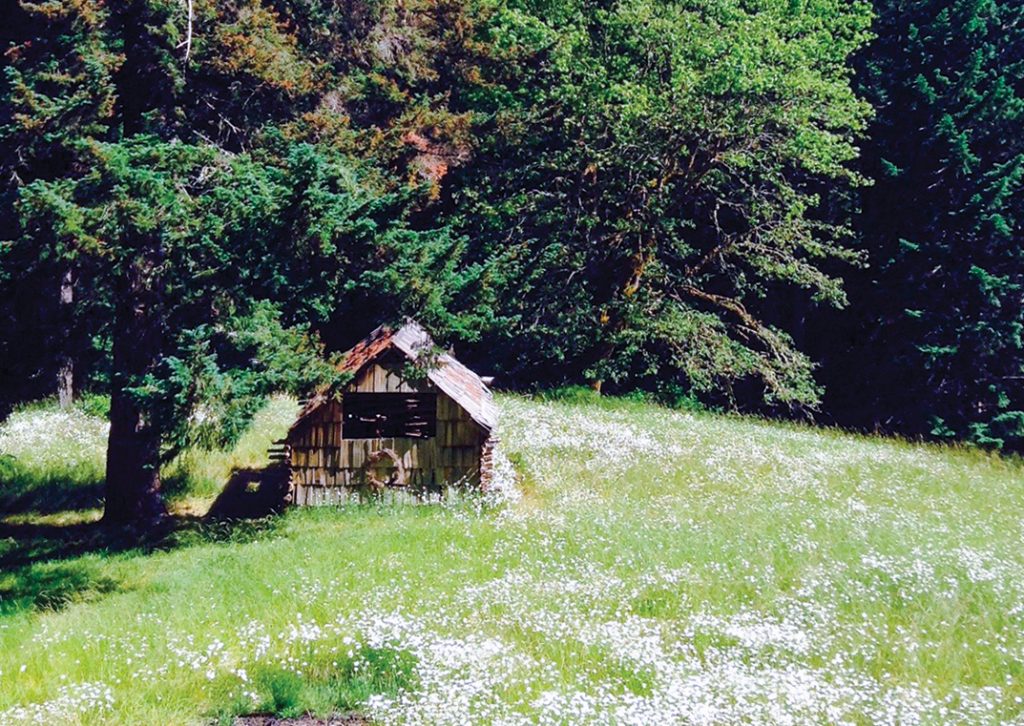
My family and I spent the summer and fall of 2015 living in an off-the-grid cabin in the Klamath Mountains above the Rogue River of southwest Oregon. We were two hours from the nearest grocery store and more or less neighborless in that far, rugged, difficult country. But we weren’t alone. We had one another, my wife and I and our six-year-old son and four-year-old daughter, and we had the many wild creatures of the mountain. The swift, furious hummingbirds; the curious otter; the gray fox that left delicate piles of scat along the river trail; big black bears loping off into the woods. And we shared the meadow below the cabin with two deer. They showed up in June and spent a good part of their day in the meadow, always the two of them. We named them Daisy and Danny. We came to count on them. We’d look up from gardening, from splashing in the old washtub, from napping beneath the apple trees – and they’d be right there, lipping windfall apples, turning a soft black eye on us.
Explain: Extinct grew out of our desire – our need, really – for the company of these deer; I couldn’t help but think of where that need might lead. And I’d already been working on a series of poems to my children that were all titled “Explain: ______.” So I used that form to follow that need. And, of course, I ended up where our wider culture too often ends up: in acquisition.


